Pando, an open-source split ergonomic keyboard from designer Julian Yap, is on sale now as a $109 pre-soldered barebones kit, reported by TechPowerUp on 10 September, with a $179 option for buyers who want better materials.
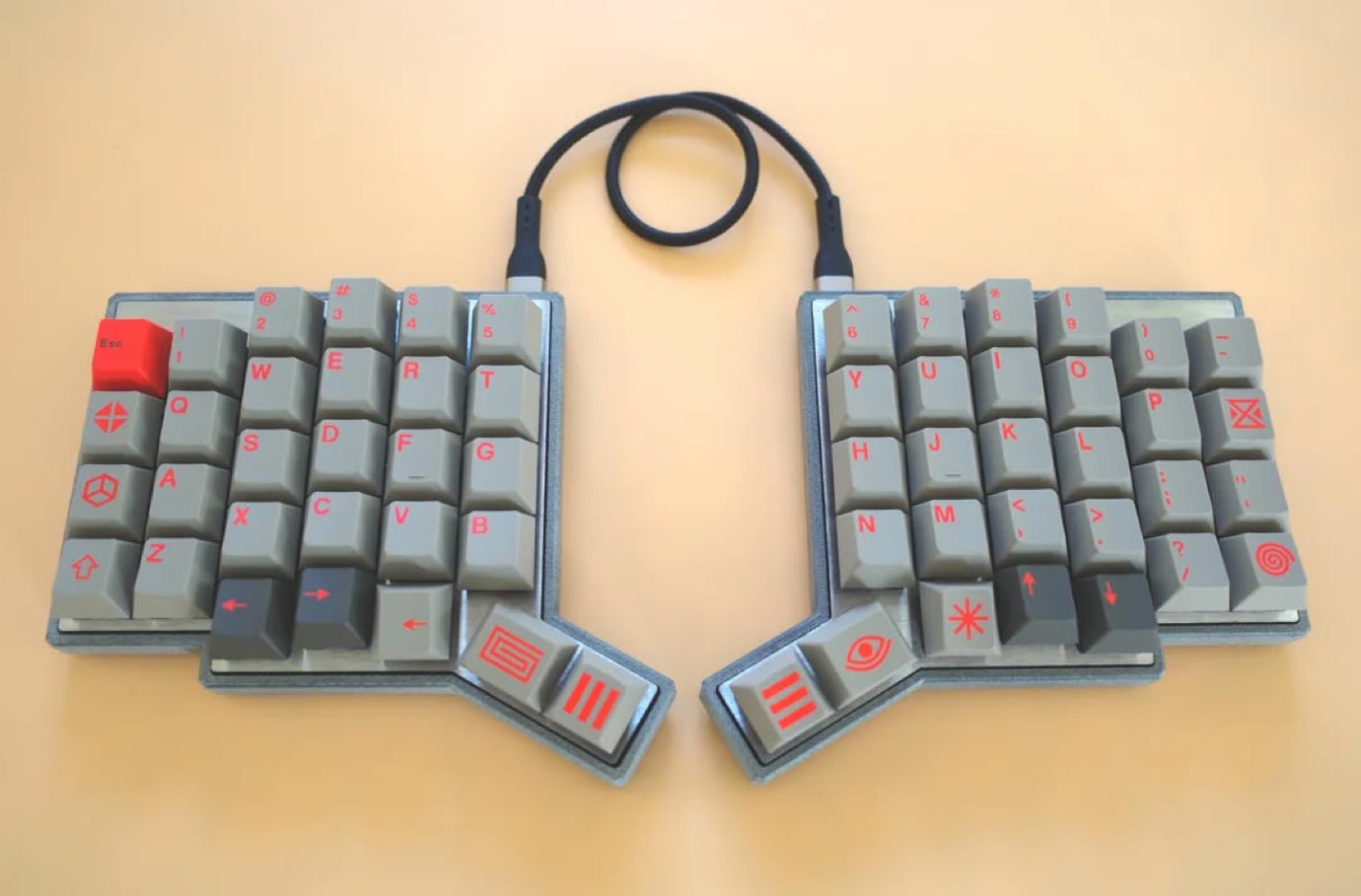
Quick specs:
- 58 keys, number row kept, thumb clusters and a partial bottom row
- One integrated STM32 microcontroller, with an IO expander in the second half instead of a second controller
- Hot-swap sockets for MX-compatible switches, standard 1u and 1.5u keycaps
- QMK firmware, configured through Vial rather than hand-edited keymaps
- The halves link with a single USB-C cable, not TRRS
- $109 for the 3D printed ASA case with FR4 plates, $179 for a multi-jet fusion printed case with stainless steel plates and weights, switches and keycaps not included
“No-solder” is about you, not the board. The kit needs no iron because the controller, the IO expander and the sockets all arrive soldered, and the switches drop into hot-swap sockets. That is a real convenience compared with the Pando58, the predecessor, which shipped as a solder-it-yourself kit. It is not solderless construction, and commenters in the covering thread said as much. The build change is assembly, not architecture.
What the integrated controller actually buys. Most splits near this price run two dev boards, a Pro Micro or RP2040 per half, joined by TRRS, which can damage a controller if the cable is unplugged while the board is powered. Pando uses one STM32 and serves the second half over USB-C through an on-board expander. One controller, one cable type, one fewer failure mode, and that is the genuinely uncommon part at this price. The article puts comparable prebuilt splits at $250 or more, or leaves you soldering a cheap kit yourself. With $15 to $20 of MX switches and around $20 of keycaps, a Pando build totals roughly $150. The 58-key layout drops the function row, which the designer calls a gentle entry into ergo boards.
Is a single controller and USB-C between halves enough to pull you off a Pro Micro build, or is losing the function row still the dealbreaker?