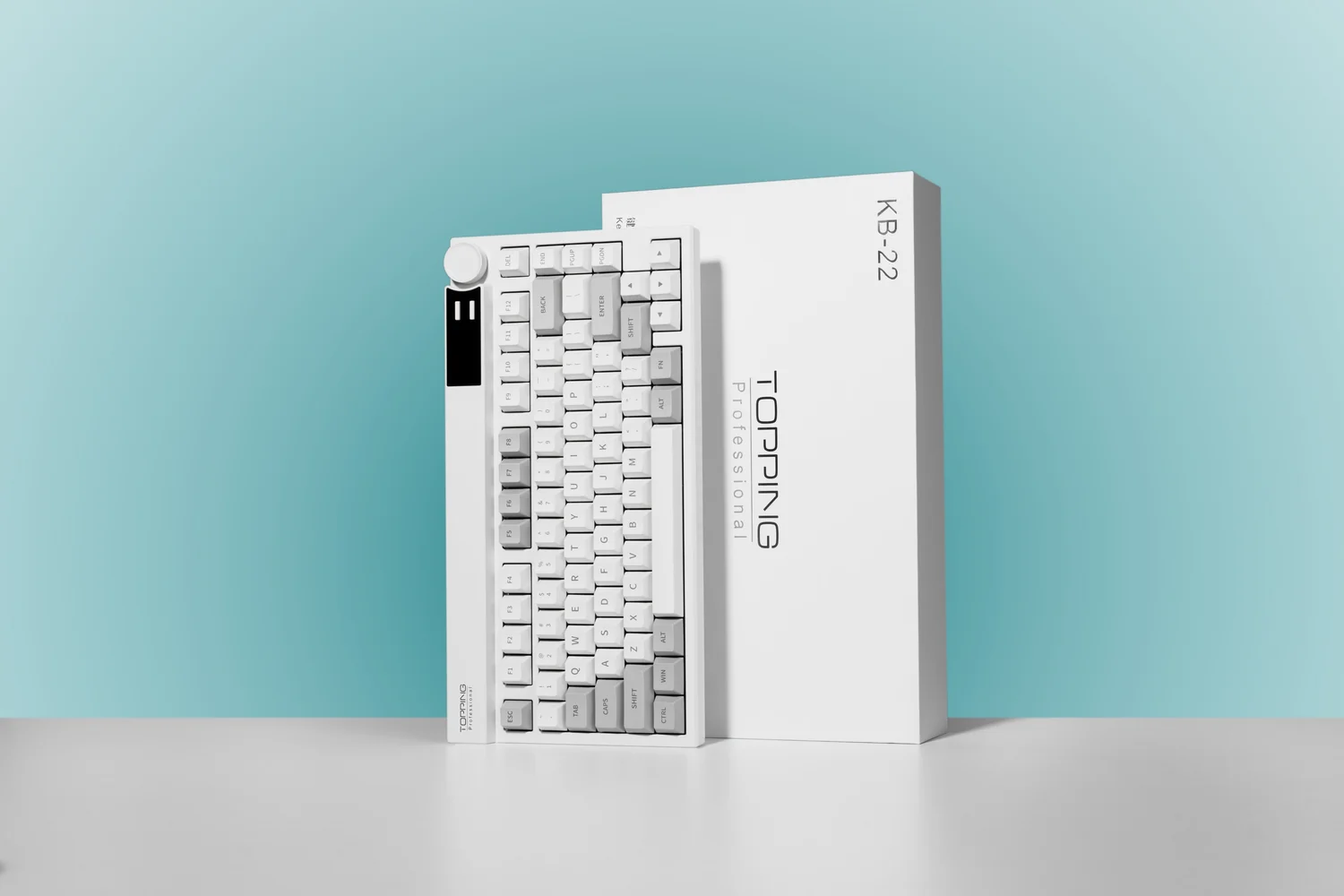
TOPPING has taken its E-series audio interface hardware out of the desktop box and built it into a keyboard: the KB22 Professional Keyboard Audio Interface, announced on 15 September at $269.
Quick specs:
- 2-in/2-out interface with mic, line and instrument inputs, 48V phantom power and up to 88dB of mic gain
- Headphone amp rated at 1100mW x 2 into 32 ohms, 0.2 ohm output impedance, support for 16 to 600 ohm headphones
- DAC dynamic range up to 126dB, ADC up to 119dB, PCM to 384kHz/32-bit and DSD256
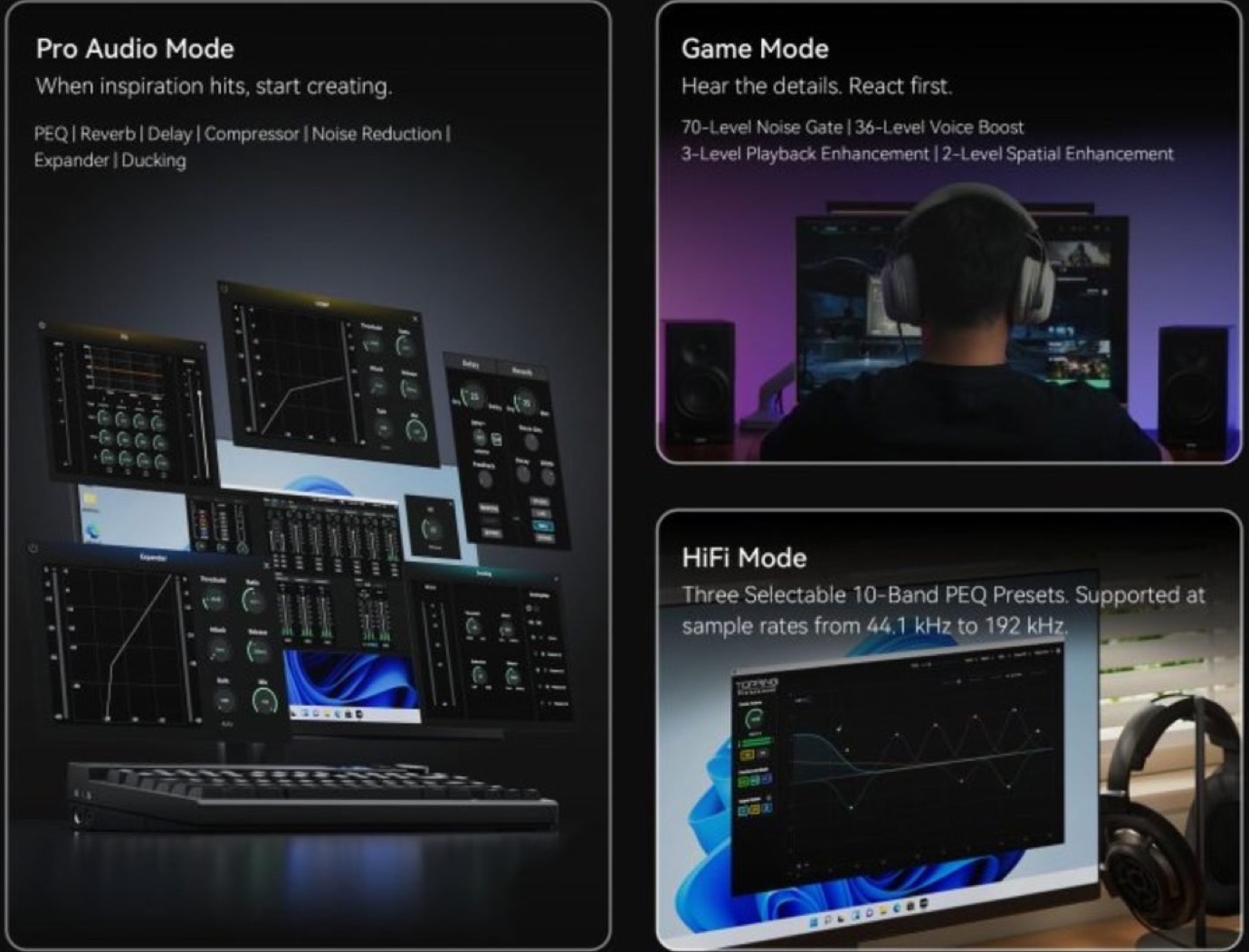
- HiFi, Game and Pro Audio modes, six loopback channels, dual-device streaming, real-time mixing and ducking
- Gasket-mounted and hot-swappable, VIA remapping, RGB, 1.46-inch colour display
- Qingning Silent Tactile or Anlan Silent Linear switches, $269, Windows, macOS, iOS and Android
Where the numbers get soft:
The 126dB and 1100mW figures are converter and amplifier specifications, not a measurement of the jack on a keyboard chassis, and nothing independent has measured this one yet. The DSP list is generous (PEQ, reverb, delay, compressor, noise reduction, expander, ducking, and a 70-level noise gate in Game mode), but that granularity is marketing language rather than a number you can compare with anything. The input side is the new part: the FiiO KB3 and MOONDROP DASH75 hybrids before it were playback only, with no microphone preamp and no ADC.
What it is up against:
- TOPPING’s own E2X2 OTG, the same 2-in/2-out layout without a keyboard: $199 on topping.store
- FiiO’s KB3, the 2024 hybrid that opened this category: $149, hot-swappable and VIA, but playback only
- MOONDROP’s DASH75, which got here first in 2023
The keyboard part therefore costs about $70 over TOPPING’s equivalent standalone interface, and the audio hardware is the half you would otherwise buy as a separate box. TOPPING first showed the hybrid at the Guangzhou audio show in 2025, a year before launch.
Would you trade a desk of separate boxes for one cable to your typing and your recording, or would you rather the interface stayed a box you can upgrade on its own?